Last updated: October 8, 2026
The 2 a.m. Bathroom Trip: Making the Bed-to-Toilet Route Safer
Tyler Pahl, DPT — Educational Content
It's 2 a.m. Your mom wakes up and has to go, now. She sits up fast, stands up fast, and heads down a dark hallway half asleep. Most nights, nothing happens. But it's a setup for a fall I saw again and again in people's homes.
The good news: the route is short, and most fixes are simple and cheap. Let's walk it from bed to toilet.
Why nighttime trips are risky
A few things stack up at night:
- Urgency. When you have to go right now, you rush. The National Institute on Aging (NIA) lists rushed bathroom trips, such as from incontinence, as a fall risk.
- Low light. In one study, older adults walked slower and less steadily by night-light than in normal room light.
- Getting up too fast. Blood pressure can drop when you go from lying to standing (postural hypotension). The CDC notes this can cause dizziness and make a fall more likely.
- Sleepiness. NIA notes that being tired makes falls more likely.
- Medicines. Some medicines can cause dizziness or confusion, and the more medicines someone takes, the higher the fall risk (NIA).
Research also links waking at night to urinate (nocturia) with a higher risk of falls. The 2 a.m. trip is worth planning for.
Getting up safely: sit, pause, then stand
This habit is free, and it may matter most. CDC STEADI guidance says to get out of bed slowly: sit up, sit on the side of the bed, then stand.
- Sit up in bed.
- Sit at the edge of the bed with both feet flat on the floor.
- Pause for a few breaths. Pump your ankles up and down and open and close your hands.
- Stand with something sturdy to hold.
- Stand still for a moment before you walk. If you feel dizzy, sit back down.
Urgency makes this hard, so practice it during the day until it's automatic.
Lighting the route
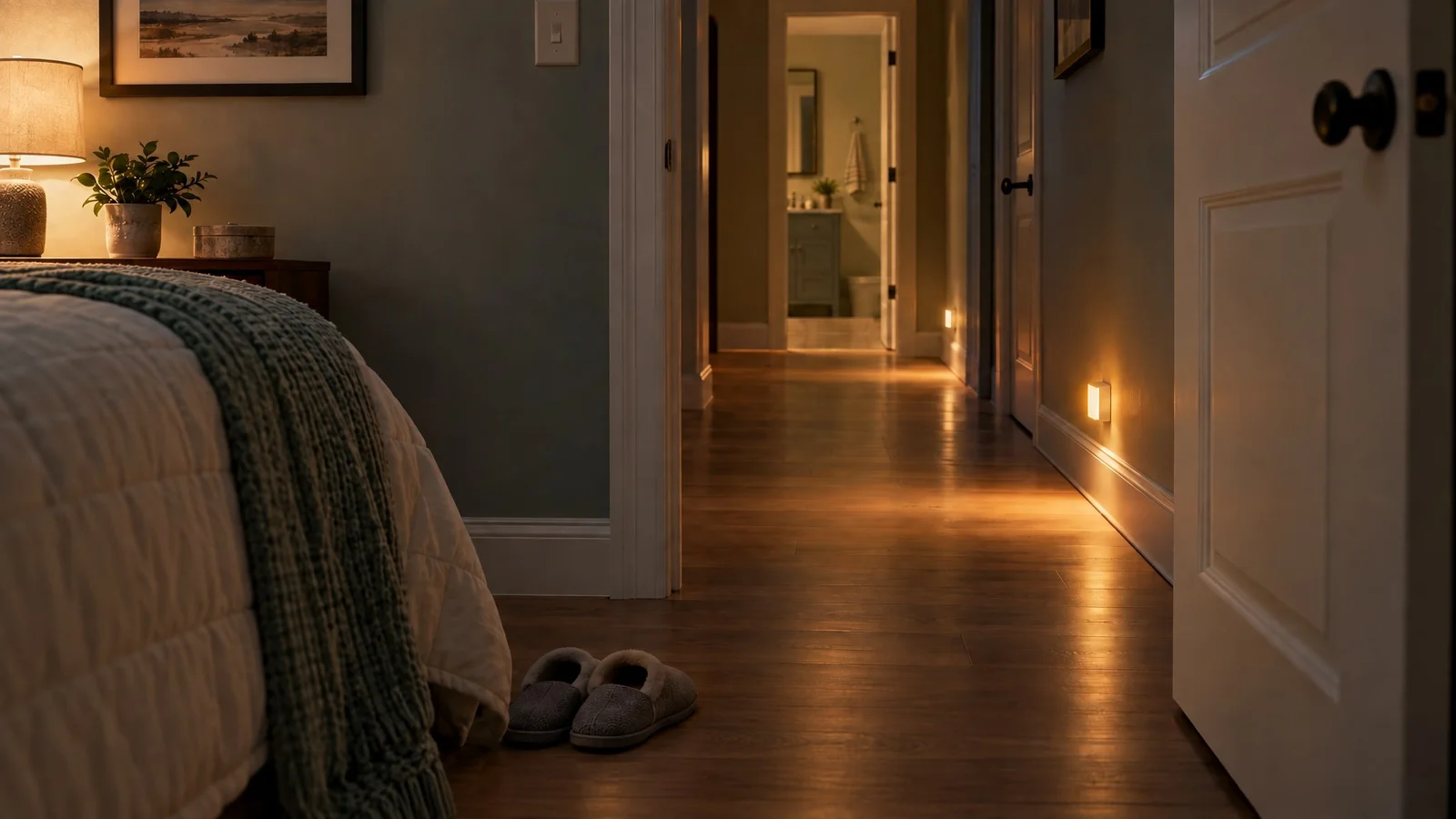
The CDC's home safety checklist asks a simple question: Is the path from your bed to the bathroom dark? If so, add night lights.
- Use motion-sensor night lights along the whole route: by the bed, in the hallway, and in the bathroom. Nobody has to find a switch.
- Light the floor. Low plug-in lights show the edges of the path. In the lighting study above, marking the walking path helped higher-risk adults walk more steadily than night lights alone.
- Pick soft, warm light. Enough to see the floor, not so bright it fully wakes everyone up. Bright light at night can disrupt sleep.
- Keep a lamp within reach of the bed, plus a flashlight for power outages (CDC and NIA tips).
Clearing the path
Walk the route yourself at night, with the lights set the way your parent has them. Look for:
- Rugs. NIA advises against throw rugs. If one stays, it needs non-slip backing or tape.
- Cords. Lamp, charger, and oxygen tubing should run along the wall, not across the path.
- Pets. A dog asleep in the hallway is hard to see. Know where pets sleep.
- Furniture and clutter. If they have to walk around a chair, move it. Shoes, baskets, and bags on the floor all go.
Bed height and support
- Height. Sitting on the edge, feet should rest flat on the floor with knees about level with hips. Too low makes standing hard; too high and feet dangle.
- Something to hold. A bed assist handle, or furniture that won't tip or roll, helps with that first stand.
- Be careful with bed rails. The FDA warns that adult portable bed rails can cause entrapment and serious injury, especially for people with confusion, dementia, Parkinson's, or low blood pressure. If you use one, choose one that meets the ASTM F3186-17 standard, install it exactly as directed, and check often for gaps between rail and mattress. Ask your parent's health care team if a rail is right for them.
For more on choosing a bed rail, bed cane, or pole, checking for gaps, and getting up safely, see Bed Rails, Bed Canes, and Getting Out of Bed Safely.
The bathroom end
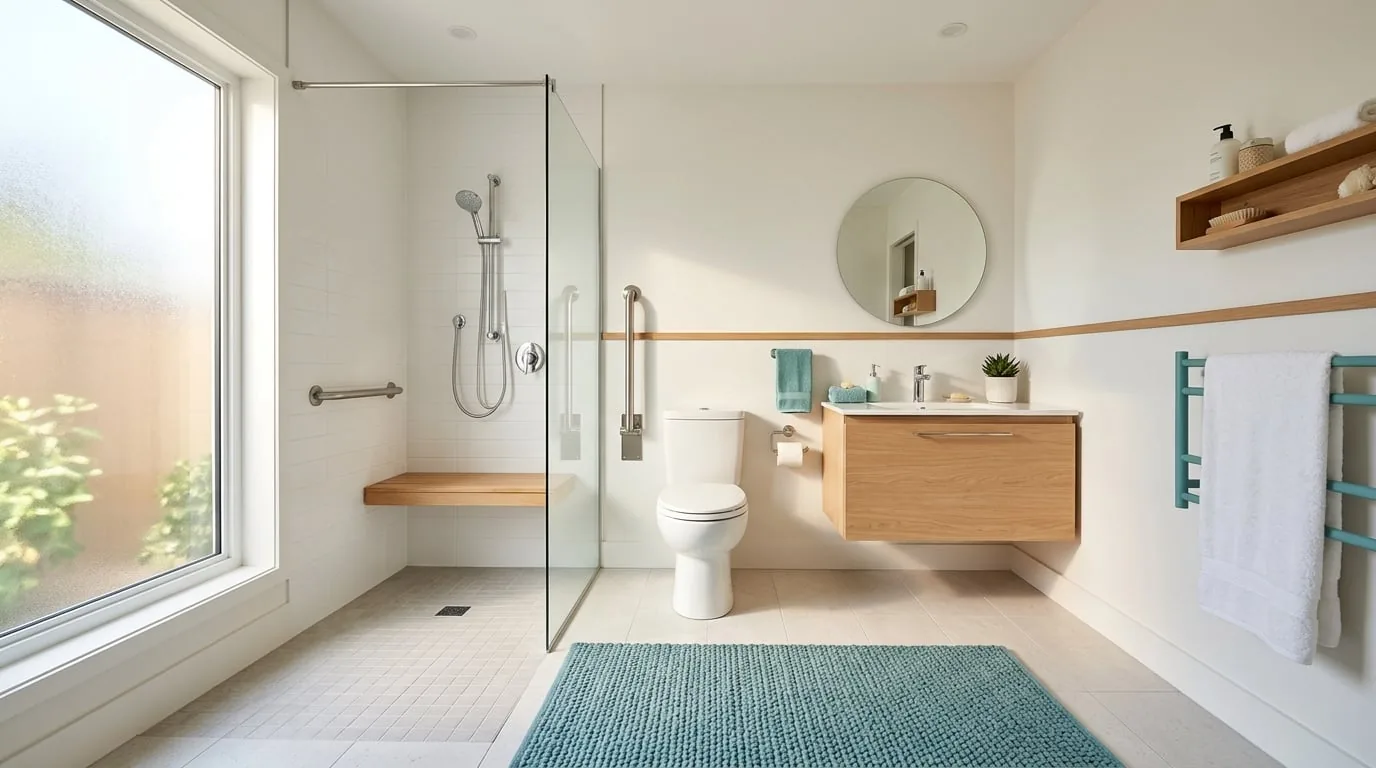
- Toilet height. A low toilet is hard to rise from when groggy. Our bathroom safety guide covers raised seats and comfort-height toilets.
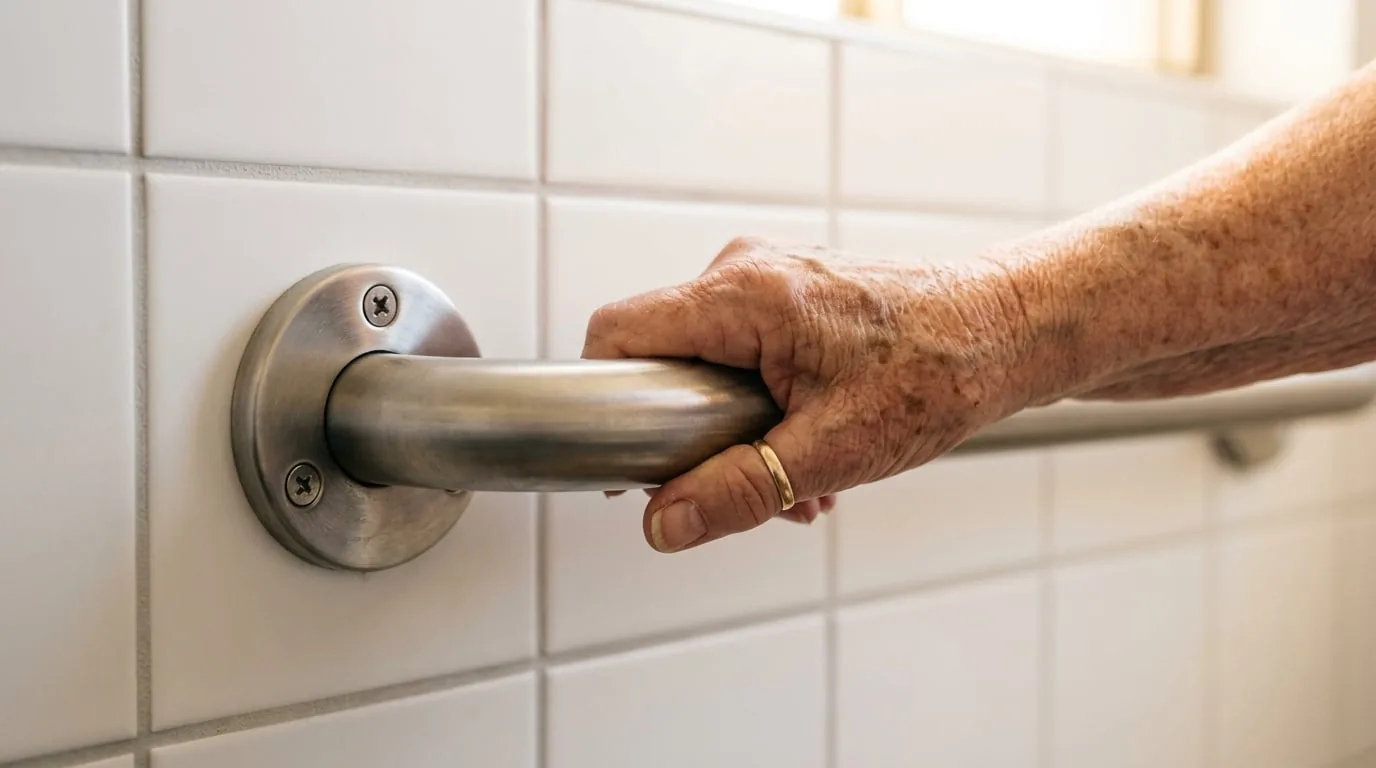
- Something solid to push from. At 2 a.m., people grab the nearest thing. A toilet safety frame or a properly installed grab bar can hold them; a towel bar, sink edge, or toilet paper holder can't. See Grab Bars vs. Towel Bars: What Actually Keeps You Safe for placement and mounting.
- Light and a dry floor. A motion night light inside, and no wet spots or sliding mats.
Options that shorten the trip
Sometimes the safest trip is a shorter one.
- Bedside commode. Often makes sense during an illness, after surgery, or when standing is very unsteady.
- Urinal. A handheld urinal within reach of the bed works well for some people.
This isn't giving up. It's a smart choice for the riskiest hours. An occupational therapist can help you choose and set one up.
Shoes and socks
NIA recommends nonskid, rubber-soled, low-heeled shoes, and warns against walking in socks or smooth-soled slippers. Keep closed-back, non-slip slippers right where the feet land by the bed. Skip backless slippers. If your parent sleeps in socks, choose grip socks.
Reducing how often they have to go
Fewer trips means fewer chances to fall. But this part belongs to your parent's doctor, not a website. Worth asking about:
- Nighttime trips. Tell the doctor how many times a night. There may be a treatable cause.
- Fluid timing. Ask whether to drink more earlier in the day and less in the evening. Don't cut fluids without asking. Dehydration can cause its own dizziness.
- Caffeine and alcohol. NIA notes these can bother the bladder.
- Medicines. Ask the doctor or pharmacist whether any medicines add to nighttime trips, dizziness, or grogginess. Never stop or change a medicine on your own.
When to bring in a PT or OT
Ask the doctor about a physical or occupational therapist if your parent:
- Has fallen or nearly fallen, especially at night
- Gets dizzy when standing up
- Struggles to get up from the bed or toilet, or with balance and walking
- Is coming home after a hospital stay or surgery
A PT can work on strength, balance, and safe ways to stand and walk. An OT can look at the bedroom and bathroom setup. NIA notes a doctor may suggest one of them visit the home after a fall.
Quick checklist: the 2 a.m. route
- Sit, pause, then stand, practiced during the day
- Motion-sensor night lights by the bed, in the hallway, and in the bathroom
- No rugs, cords, clutter, furniture, or pets in the path
- Bed height lets feet rest flat, with something sturdy to hold
- Toilet height checked, with a toilet frame or grab bar (not a towel bar)
- Non-slip, closed-back slippers by the bed
- Bedside commode or urinal considered, if needed
- Nighttime trips, fluids, and medicines brought up with the doctor
Start with the free 2-page home safety checklist for the rest of the house. For the full picture, the $49 House & Care Kit includes the 18-page Home Safety Checklist, the Caregiver Starter Kit, and the Doctor Visit Binder, so you can walk the house, organize what you see, and take it to the doctor.
Sources
- Centers for Disease Control and Prevention, STEADI. Check for Safety: A Home Fall Prevention Checklist for Older Adults. https://www.cdc.gov/steadi/pdf/steadi-brochure-checkforsafety-508.pdf
- Centers for Disease Control and Prevention, STEADI. Postural Hypotension: What It Is & How to Manage It. 2017. https://www.cdc.gov/steadi/pdf/steadi-brochure-postural-hypotension-508.pdf
- National Institute on Aging. Falls and Fractures in Older Adults: Causes and Prevention. https://www.nia.nih.gov/health/falls-and-falls-prevention/falls-and-fractures-older-adults-causes-and-prevention
- National Institute on Aging. Preventing Falls at Home: Room by Room. https://www.nia.nih.gov/health/falls-and-falls-prevention/preventing-falls-home-room-room
- National Institute on Aging. 15 Tips To Keep Your Bladder Healthy. https://www.nia.nih.gov/health/bladder-health-and-incontinence/15-tips-keep-your-bladder-healthy
- Pesonen JS, Vernooij RWM, Cartwright R, et al. The Impact of Nocturia on Falls and Fractures: A Systematic Review and Meta-Analysis. Journal of Urology. 2020;203(4):674–683. https://pubmed.ncbi.nlm.nih.gov/31347956/
- Figueiro MG, Plitnick B, Rea MS, Gras LZ, Rea MS. Lighting and perceptual cues: effects on gait measures of older adults at high and low risk for falls. BMC Geriatrics. 2011;11:49. https://bmcgeriatr.biomedcentral.com/articles/10.1186/1471-2318-11-49
- U.S. Food and Drug Administration. Recommendations for Consumers and Caregivers about Adult Portable Bed Rails. https://www.fda.gov/medical-devices/adult-portable-bed-rail-safety/recommendations-consumers-and-caregivers-about-adult-portable-bed-rails
This article is for learning purposes only. It is not medical advice, diagnosis, treatment, or physical therapy, and reading it does not create a therapist–patient relationship. Your Home Health PT does not provide services or home evaluations. Always talk with your own doctor or licensed health care provider before making changes to medicines, fluids, exercise, or medical equipment. If someone has fallen and is hurt, call 911.
This is educational material from Tyler A. Pahl, DPT (Nebraska License #4316). It is not a home evaluation or physical therapy treatment. Share it with your own provider.
Need a house plan, not just an article?
Download the free 2-page checklist, or get the House & Care Kit ($49) for the full 18-page walkthrough, caregiver pages, and doctor visit binder.
Dr. Tyler A. Pahl, DPT, Doctor of Physical Therapy obtained from Briar Cliff University with four years of Medicare home health clinical experience. He also holds an Honor's Bachelor of Science degree in Medical Biology with a minor in Psychology and Interdisciplinary Sciences from the University of South Dakota.
This content is for educational purposes only. Always consult with your healthcare provider before starting or changing any exercise program.