Last updated: August 12, 2026
Home Safety Checklist for Seniors: The Five Areas Most People Overlook
Educational Disclaimer: This content is for learning purposes only. It is not medical advice. Always talk to your doctor before starting any exercise program.
Tyler Pahl, DPT — Educational Content
Most people think falls happen on icy sidewalks or steep stairs. But most falls happen right at home. The good news is that most falls can be stopped with a few simple changes.
Home safety sounds like common sense. But the details matter. Throw rugs, dark hallways, a slippery tub, a messy entryway. Each one seems small. But for someone whose balance or vision has changed with age, these little hazards add up fast.
This guide covers the five home areas where falls happen most. It also shares the fixes that help the most.
Why Home Safety Matters More Than Most People Realize
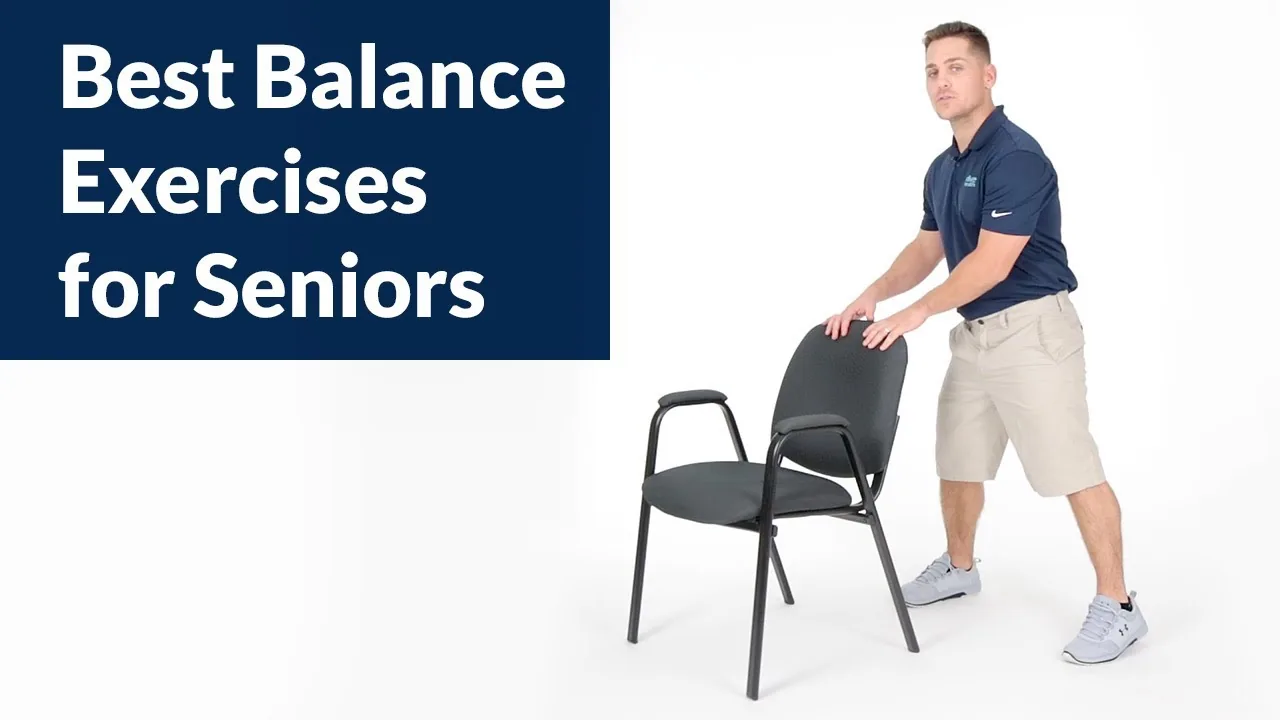
Falls are the top cause of injury for adults over 65. Most families don't see the risk coming. Balance, strength, and vision change slowly. A home that felt safe five years ago can quietly become a danger zone. Alongside home changes, building strength and steadiness with fall prevention exercises gives you two layers of protection.
The good news? Changes to your home are one of the best ways to lower your fall risk. You don't need a gym or weekly classes. You just need a Saturday afternoon, a few trips to the hardware store, and fresh eyes on familiar spaces.
The Five Areas Most Seniors Overlook
1. The Bathroom
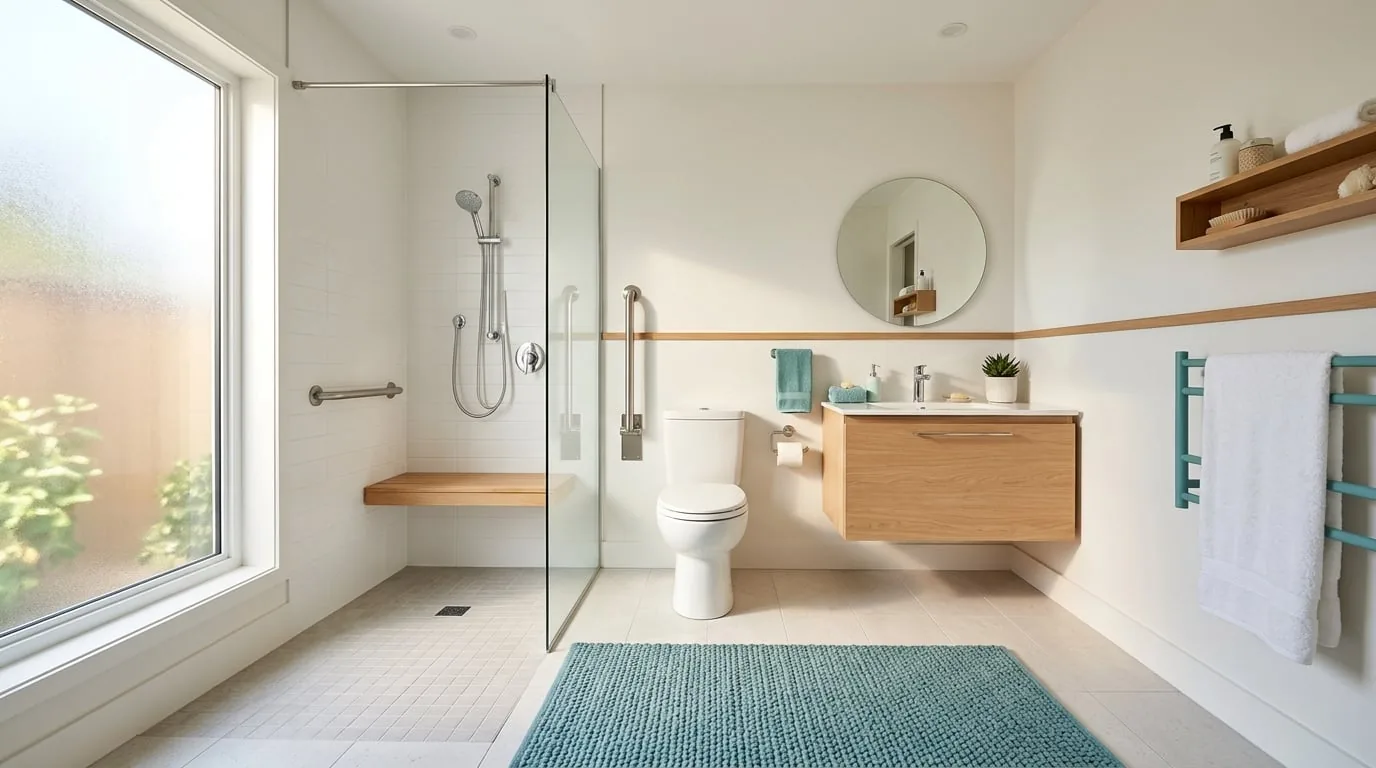
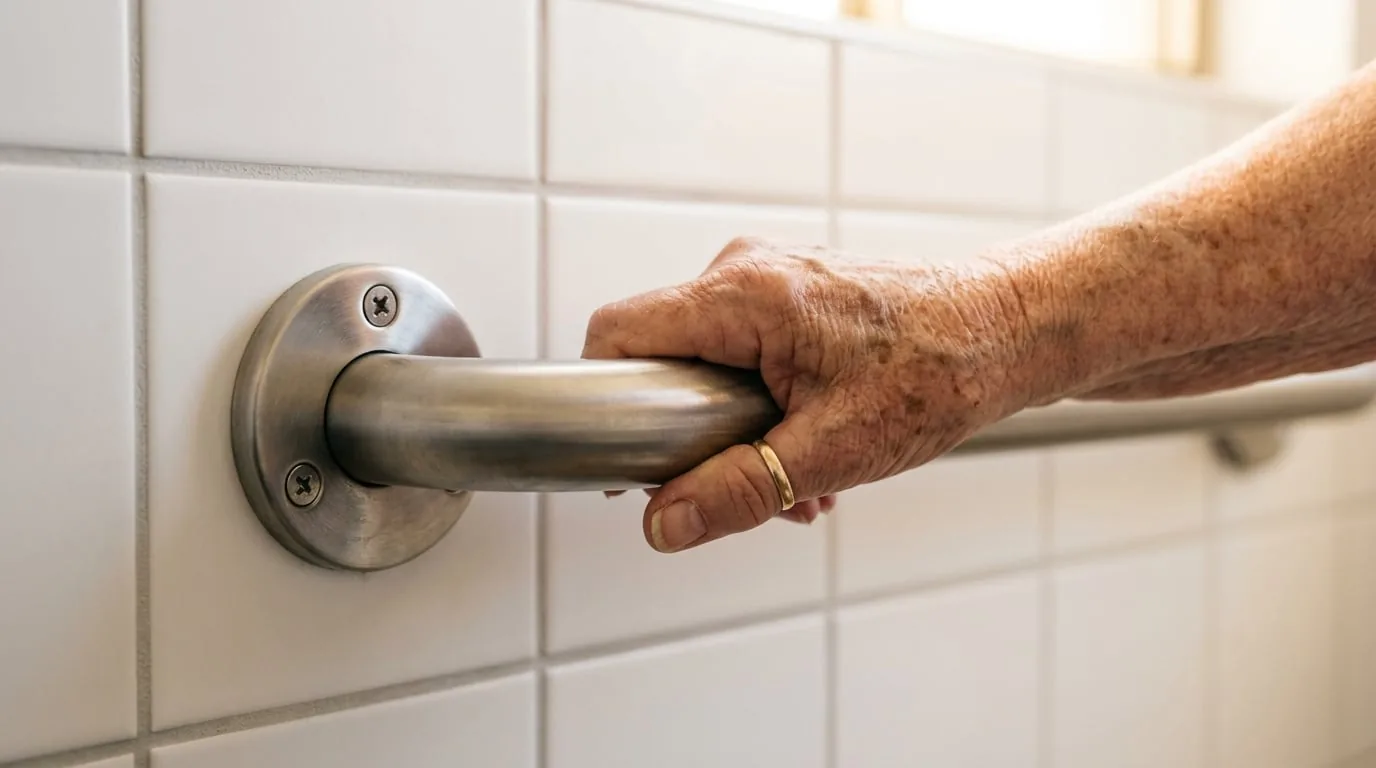
The bathroom is the most dangerous room in the house for older adults. Wet tile, tight spaces, and getting in and out of the tub or off a low toilet are all risky. Adding grab bars next to the toilet and inside the tub or shower is the best change you can make—but make sure they’re real grab bars, not towel bars (here’s why that matters). For a full zone-by-zone bathroom guide, see our evidence-based bathroom safety article. A non-slip bath mat inside the tub and on the floor outside adds more protection. If your toilet seat is low, a raised toilet seat (sold at most pharmacies) makes standing up a lot easier.

2. The Bedroom
Late-night trips to the bathroom are one of the most common times people fall. The fix is easy: put a motion-activated night light along the path from your bed to the bathroom. This way you don't have to search for a light switch in the dark. Keep the path clear of shoes, cords, and clutter. If your bed is very low, bed risers can make getting in and out easier on your knees and hips. Keep a phone near your bed in case of an emergency.
3. The Kitchen
Kitchens have two main dangers: reaching too high and wet floors. Move things you use often — plates, cups, spices — to waist-to-shoulder height. That way you won't need to climb a step stool or stretch overhead. Put a rubber-backed mat in front of the sink to soak up splashes. If your floor is tile or linoleum, wipe up spills right away. Even a few drops of water can cause a slip.

4. The Entryway
Walking from outside to inside means a change in light, a change in flooring, and sometimes a step. Make sure your entry is well-lit. Put in brighter bulbs or add an outdoor light on a timer. Secure any loose mats. Use threshold strips to smooth out the edge between floor surfaces. If there's a step, add a handrail on at least one side — even for just one step up.
5. Stairways
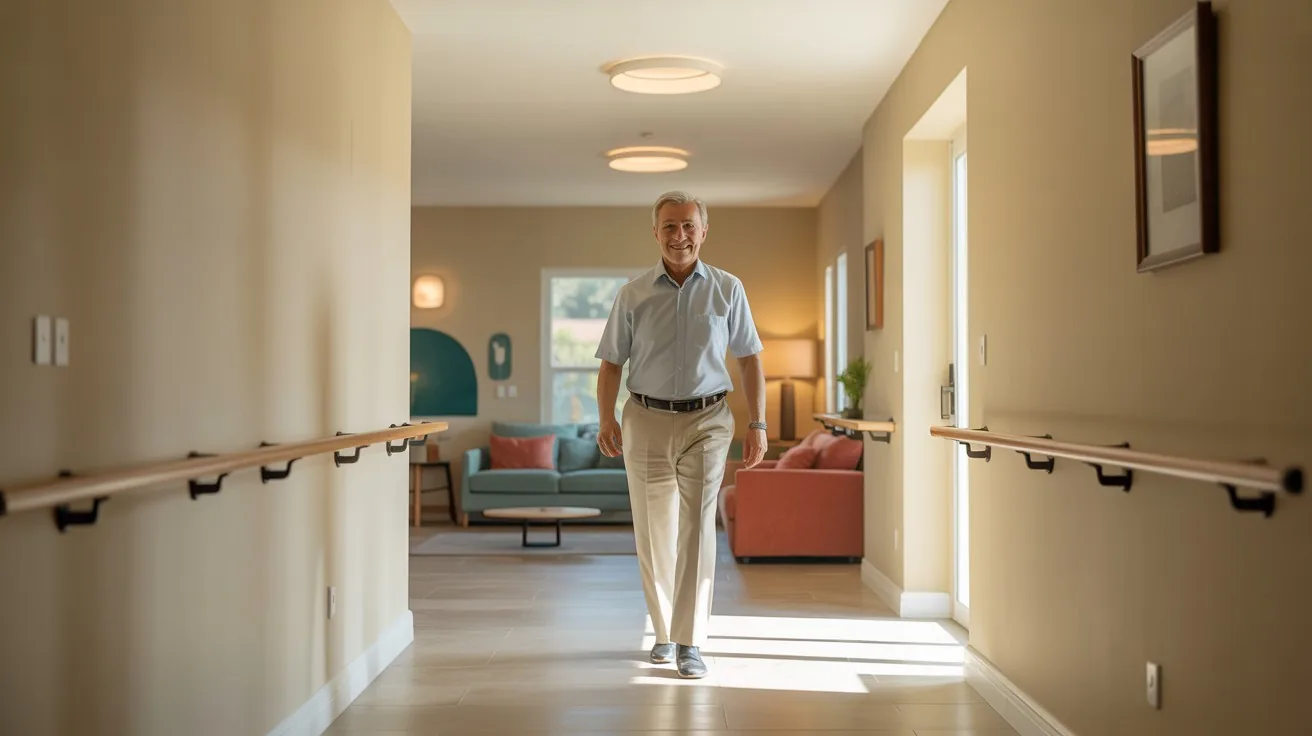
Stairs take balance, coordination, and leg strength every single time. Make sure handrails are on both sides, run the full length of the stairs, and are firmly attached. Add non-slip strips to each step for better grip. Remove anything stored on the stairs — books, laundry, shoes. Add light switches at both the top and bottom so you never walk the stairs in the dark.

Simple Fixes That Cost Under $20
You don't need to remodel your home to make it safer. Here are some of the best changes, all under $20:
- Non-slip bath mat for inside the tub — about $10–$15 at most pharmacies
- Motion-activated night lights — a pack of 2–3 costs about $12–$18
- Non-slip stair treads — sticky strips cost about $10–$15 for a set of 10
- Rubber-backed kitchen mat — $10–$15 at any home goods store
- Electrical cord organizers — clips to keep cords flat against walls, under $10
Grab bars cost a little more (usually $15–$30 each, plus installation). But they are the single best safety change you can make in any home.
When to Call a Professional vs. DIY
Most of these changes can be done by you, a family member, or a handy neighbor. Grab bars are one area where it's worth calling someone with experience. Grab bars must be anchored into wall studs to hold body weight. A bar put into drywall alone can pull right out when you need it most.
If your home needs bigger changes — like a ramp, a walk-in shower, or major lighting work — many communities have programs to help with the cost. Your local Area Agency on Aging can point you to home safety programs near you.
Want to check your home room by room? Our free Home Safety Checklist is a printable PDF that covers everything above and more. It's a great way to spend 30 minutes making your home a safer place.
Next step: Download the free Home Safety Checklist and walk through your home — or your parent's home — room by room. Many families find it helpful to do this together. A second set of eyes often spots things you walk past every day without noticing.
This article is for learning purposes only. It is not physical therapy treatment or medical advice. Always talk to your doctor or a licensed physical therapist before starting any exercise program.
Need a house plan, not just an article?
Download the free 2-page checklist, or get the House & Care Kit ($49) for the full 18-page walkthrough, caregiver pages, and doctor visit binder.
This is educational material from Tyler A. Pahl, DPT. It is not a home evaluation or physical therapy treatment. Share it with your own provider.
Dr. Tyler A. Pahl, DPT, Doctor of Physical Therapy obtained from Briar Cliff University with four years of Medicare home health clinical experience. He also holds an Honor's Bachelor of Science degree in Medical Biology with a minor in Psychology and Interdisciplinary Sciences from the University of South Dakota.
This content is for educational purposes only. Always consult with your healthcare provider before starting or changing any exercise program.