
Last updated: September 22, 2026
Seated exercises when standing practice is not the starting point
Educational Disclaimer: This is for learning only. It is not medical advice. Always talk to your doctor before you start any exercise program.
Tyler Pahl, DPT — Educational Content
Introduction
Seated exercises are a regular part of physical therapy practice for older adults. They appear especially often in home health settings when standing options need to be limited or modified. Reasons can include endurance, balance, comfort, or the layout of a person's home. Because these approaches are so common, they are worth understanding at a general level.
This article is an educational overview of the approaches physical therapists frequently use with seated exercise. It is not a workout, a prescription, or a set of personalized instructions. The goal is to help older adults and caregivers understand why seated work is used so often and the kind of thinking that typically surrounds it.
Why seated options are commonly chosen
Several practical reasons explain why seated exercises are chosen so frequently.
Safety is often the first consideration. Sitting provides a stable base. That typically reduces the balance demand and the concern about losing footing.
Accessibility is another common factor. Most homes already have a suitable chair, and a seated starting position can feel more approachable.
Seated positions also let a person focus on specific areas, such as the legs, hips, or posture. There is no need to manage full-body balance at the same time. This can be especially useful when balance or endurance is limited.
Finally, seated exercises are typically easy to perform at home. They rarely require special equipment or a large amount of clear floor space, which makes them practical in real living environments. That practical fit matters a great deal in home health work.
Categories of seated exercises frequently taught
Physical therapists often think about seated exercise in broad conceptual groups rather than as a single list. The categories below are described at a high level, to show how these approaches are commonly organized. They are not presented as movements to perform.
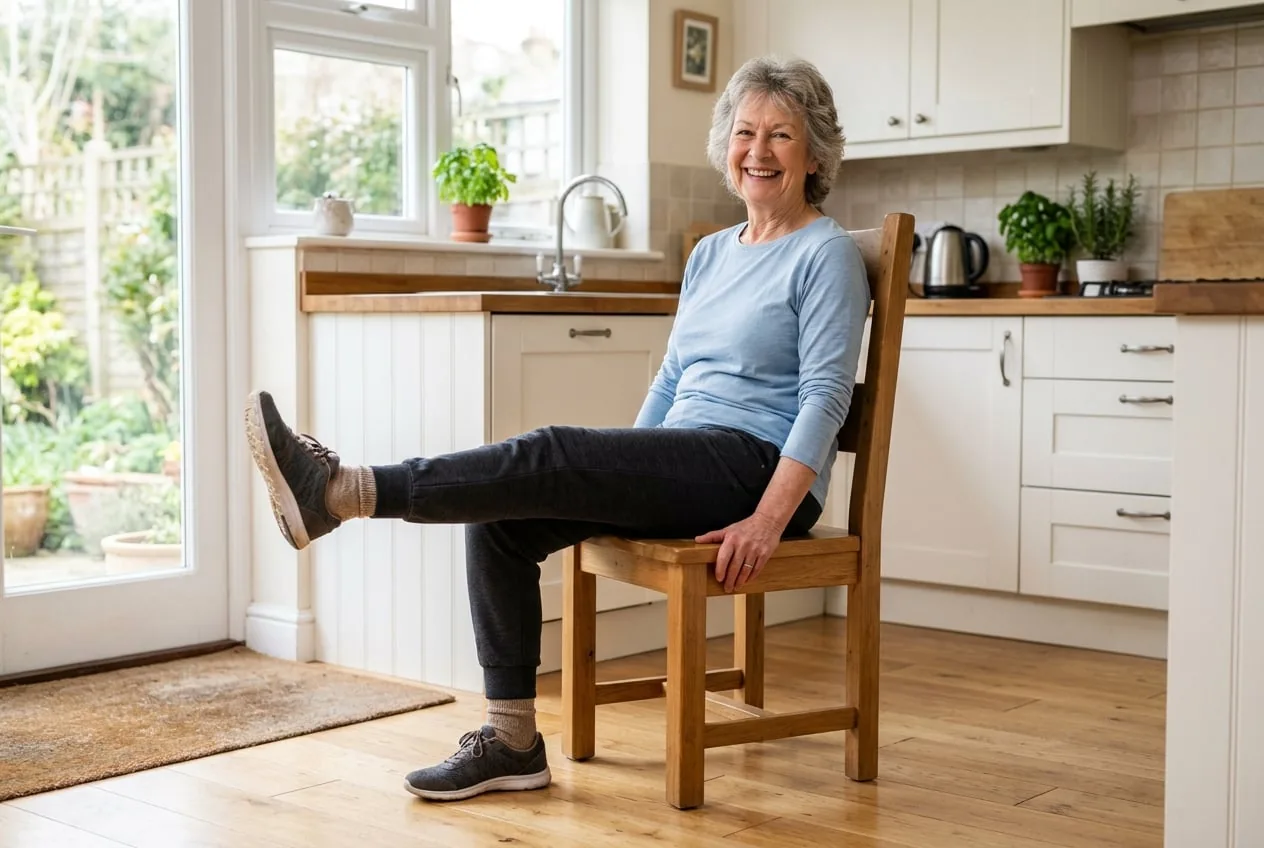
Lower body strength and control is a frequent focus. Many seated approaches gently engage the muscles of the thighs and lower legs. Those muscles are commonly involved in standing up, walking, and everyday transfers.
Hip and core support is another area that comes up often. The muscles around the hips and trunk contribute to posture and stability. Seated work can offer a supported way to give them attention.
Ankle and foot movement is frequently included as well. The feet and ankles play a role in circulation and in steady, confident movement. Seated positions allow this area to be addressed comfortably.
Upper body and posture support rounds out the picture. Gentle attention to the shoulders, arms, and upright posture is commonly part of a well-rounded seated approach. Posture influences comfort and function throughout the day.
Grouping exercises this way is itself educational. It reflects how physical therapists typically view the body as a set of connected regions rather than isolated parts.
General principles PTs typically emphasize
Beyond any specific movement, physical therapists commonly emphasize a few general principles when seated exercise is involved.
Slow, controlled movement is one that comes up frequently. Rushed or jerky motion is generally discouraged, because control tends to be safer and more effective.
Attention to form and support is another. Using a stable chair and keeping a comfortable, upright posture are commonly encouraged.
PTs also typically stress matching the challenge to a person's current ability rather than doing as much as possible. The idea is to work at a level that feels manageable and appropriate.
Many also emphasize consistency over intensity. Regular, moderate movement is often more sustainable, and more useful, than occasional hard effort.
Safety considerations commonly discussed
Safety is a recurring theme in conversations about seated exercise.
A stable chair is commonly recommended. It should be sturdy, have no wheels, and sit on a firm, non-slip surface. Posture is often mentioned as well, with an emphasis on sitting tall and comfortably. Breathing is a detail physical therapists frequently raise. Holding the breath during effort is generally discouraged, in favor of a relaxed, steady pattern.
Knowing when to stop is another common point. General guidance typically means pausing for warning signs. These include sharp pain, dizziness, lightheadedness, shortness of breath, or a feeling of being unsteady. When those signs appear, it is wise to seek professional input. Above all, the importance of professional guidance is commonly reinforced. A licensed provider can account for the specific health history and goals that an educational article cannot.
How seated work often fits into a bigger picture
Seated exercises are usually viewed as one part of a broader approach rather than a final destination. Physical therapists frequently see seated work as a foundation. Over time, and depending on the individual, it may connect to more upright or standing activity.
Whether and how that transition happens varies from person to person. That is exactly why individualized professional guidance matters. The general principle is simple. Seated work is commonly a starting point, or a supportive component within a larger, gradually evolving picture.
Closing
The purpose of this overview is educational. It explains, in plain language, why seated exercises are taught so often in physical therapy, and the common thinking that surrounds them. Understanding these general approaches can help older adults and caregivers feel more informed and better prepared to work with a licensed professional.
For related educational reading, see our other articles on seated movements commonly used in physical therapy and on daily movement habits.
This content is for educational purposes only and does not constitute medical advice, diagnosis, treatment, or individualized physical therapy. It does not create a therapist–patient relationship. Always consult your healthcare provider before starting or changing any exercise or activity.
Next step
Print a free home-safety list and movement tracker so the exercises and the house support each other.
Dr. Tyler A. Pahl, DPT, Doctor of Physical Therapy obtained from Briar Cliff University with four years of Medicare home health clinical experience. He also holds an Honor's Bachelor of Science degree in Medical Biology with a minor in Psychology and Interdisciplinary Sciences from the University of South Dakota.
This content is for educational purposes only. Always consult with your healthcare provider before starting or changing any exercise program.