Last updated: August 12, 2026
Chair Exercises for Seniors at Home: 6 Seated Movements to Try Today

Educational Disclaimer: This is for learning only. It is not medical advice. Always talk to your doctor before you start any exercise program.
Tyler Pahl, DPT — Educational Content
Why Chair Exercises Are Worth Your Time
Many people think chair exercises are too easy. That's not true.
Physical therapists use chair exercises all the time. They build strength and get your blood flowing. They also help you move better. Best of all, they work if you can't stand for long. If you get dizzy, tire out fast, or haven't moved much, start here.
A little bit each day beats one hard workout a week. Ten minutes a day gets real results. Chair exercises are short enough to do daily. Most people can start right away.
Before You Start — How to Exercise Safely
Here's what a physical therapist would tell you first. Think of this as your quick "getting started" list. It's not a warning — just smart prep.
General tips:
- Start with 1–2 sets of 8–10 reps
- Do this 2 times per day
- Move slowly and smoothly — don't hold your breath
- Use a firm, stable chair with your feet flat on the floor
Stop right away and call your doctor if you feel any of these:
- Chest pain or tightness in your chest
- Trouble breathing that feels odd or too strong
- Pain at a 6 or higher out of 10 (mild soreness at 1–5 is okay)
- Dizziness or feeling lightheaded
- A fast or uneven heartbeat
This list isn't meant to scare you. It helps you know when to get help. Most people do these moves with no problems at all.
Six Chair Exercises to Try at Home
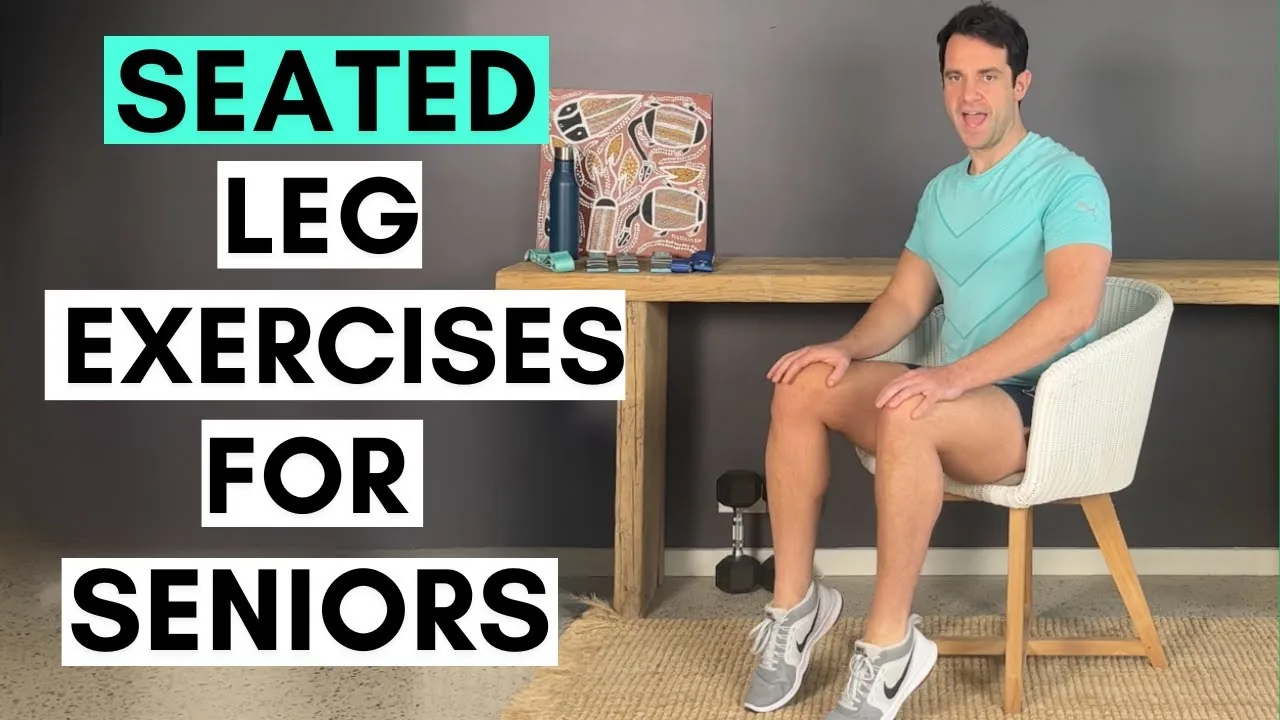
These six moves come from PT. They work your legs, hips, and feet. Strong legs and feet help you stand, walk, and stay steady.

Leg Extensions
- Sit up tall with your feet flat on the floor
- Straighten one knee as far as you can
- Hold for a moment, then slowly lower your leg
- Do both legs
Marching
- Keep your knee bent and lift one leg as high as feels good
- Slowly lower it back down
- Switch legs and repeat
Toe Raises
- Keep your heel on the floor
- Tap your toes up and down
- Do both feet
Heel Raises
- Keep your toes on the floor
- Lift your heel up and down
- Do both feet

Hip Abduction
- Sit with both knees bent and feet flat on the floor
- Slowly push both legs out to the sides
- Bring your legs back to the middle
- Move slowly and stay in control
Hip Adduction
- Sit with both knees bent
- Put a rolled towel or small pillow between your knees
- Squeeze gently and hold for 3 to 5 counts
- Slowly let go
These six moves work great as a short daily routine. Start with 1–2 sets of 8–10 reps. The whole thing takes about 10–15 minutes.
How to Fit This Into Your Day

The hard part isn't the moves — it's remembering to do them. A great trick is habit stacking. Link your moves to something you already do each day.
- After morning coffee: Before you get up, do your first set right there in your chair.
- During a TV commercial break: Mute the TV and run through all six moves. You'll be done before your show comes back on.
- Before lunch: Use the 10 minutes before you cook as your second set of the day.
Keeping track helps too. Our free Daily Tracking Sheet lets you check off each day. Many people find that once they get a streak going, they don't want to stop.
When to Talk to Your Doctor First
Talk to your doctor before you start if any of these fit you. You were in the hospital recently. Your blood pressure is not under control. You get dizzy often. Or a doctor told you to limit your activity. This isn't about being scared of exercise. It's about being smart. A quick chat with your doctor can help you start with confidence.
Ready for a full 14-day plan? The Chair Strength Starter Workbook builds on these six moves. It has a two-week calendar, daily steps, and progress tracking. It's $19 and ready to download right away.
This article is for learning only. It is not PT treatment or medical advice. Always talk to your doctor or a licensed physical therapist before you start any exercise program.
Next step
Print a free home-safety list and movement tracker so the exercises and the house support each other.
Dr. Tyler A. Pahl, DPT, Doctor of Physical Therapy obtained from Briar Cliff University with four years of Medicare home health clinical experience. He also holds an Honor's Bachelor of Science degree in Medical Biology with a minor in Psychology and Interdisciplinary Sciences from the University of South Dakota.
This content is for educational purposes only. Always consult with your healthcare provider before starting or changing any exercise program.