Last updated: September 22, 2026
5 seated exercises when standing is limited
Educational Disclaimer: This is for learning only. It is not medical advice. Always talk to your doctor or therapist before you start any exercise program.
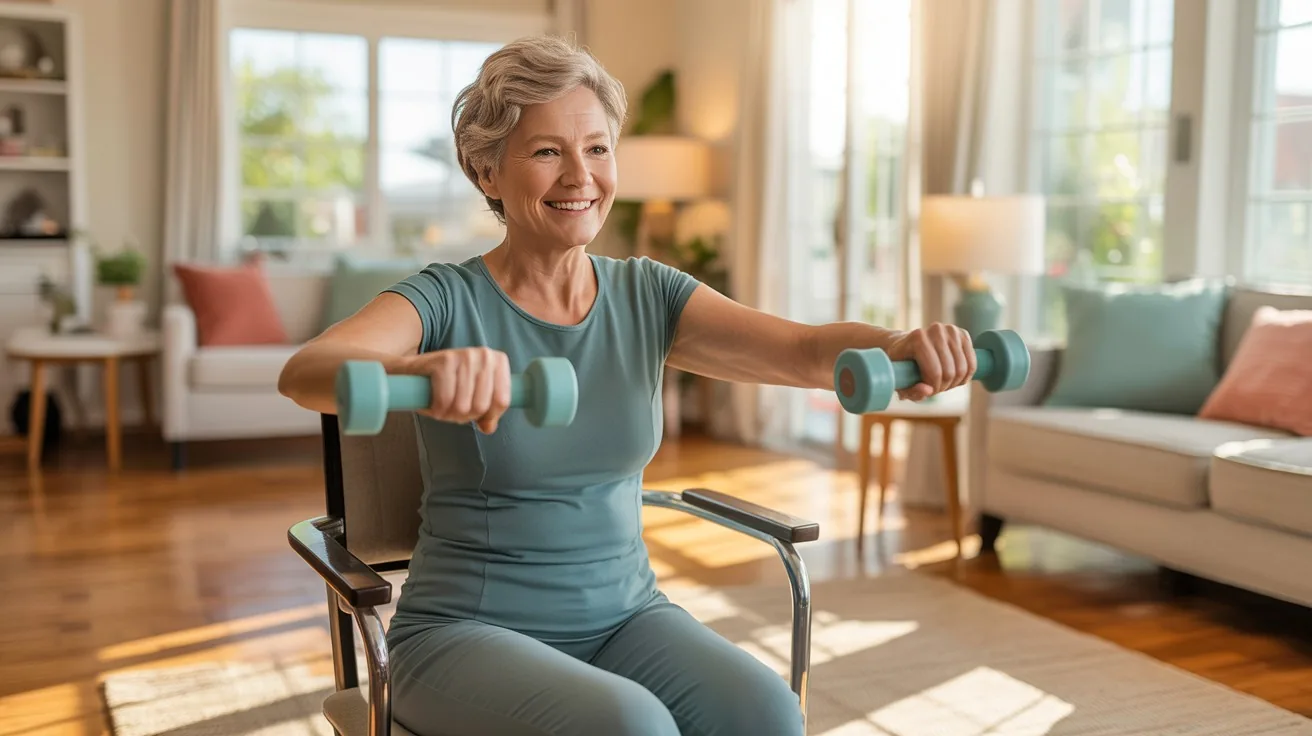
Picture this: a sturdy dining chair and a glass of water nearby. An older adult does gentle moves on their own. This is common during home health visits. Seated exercises are one of the best ways to build strength. They get muscles working again. Physical therapists (PTs) use them all the time.
This post covers five seated exercises PTs often use. This is not a plan made just for you. Your therapist or doctor will help you pick the right moves.
Why PTs Love Seated Exercises
Seated exercises take away the risk of falling. Your body can focus on the right muscles. It does not have to work hard to stay balanced. Almost any sturdy chair will work. These exercises also help with daily tasks. They help you get up from the toilet. They help you get out of a car. They help you reach into a cabinet or walk to the mailbox.
Studies show that even short bouts of exercise can build leg strength. This is true for adults over 65. PTs pick seated exercises when standing is not safe yet. They also use them after surgery or illness. They use them when you need to feel more sure of your body before moving on.
Five Seated Exercises Often Used in PT
Important: PTs use these moves in clinics. But they are NOT tips made just for you. Your PT will decide which ones are right for you after a check.
1. Seated Marches
What it looks like: Sit up tall in a sturdy chair. Keep your feet flat on the floor. Lift one knee up. Lower it slowly. Then lift the other knee.
Muscles worked: Hip muscles, front thigh muscles, core
Why PTs use it: Your hip muscles lift your foot when you take a step. When these muscles are weak, you may shuffle or trip on curbs. Seated marches train these muscles in a safe way.
Common changes:
- Easiest: Lift just a few inches. Hold the chair seat for support.
- Medium: Lift higher with arms relaxed. Go slowly.
- Harder: Hold the top spot for 2 seconds. Add more reps over time.
2. Seated Knee Straighteners
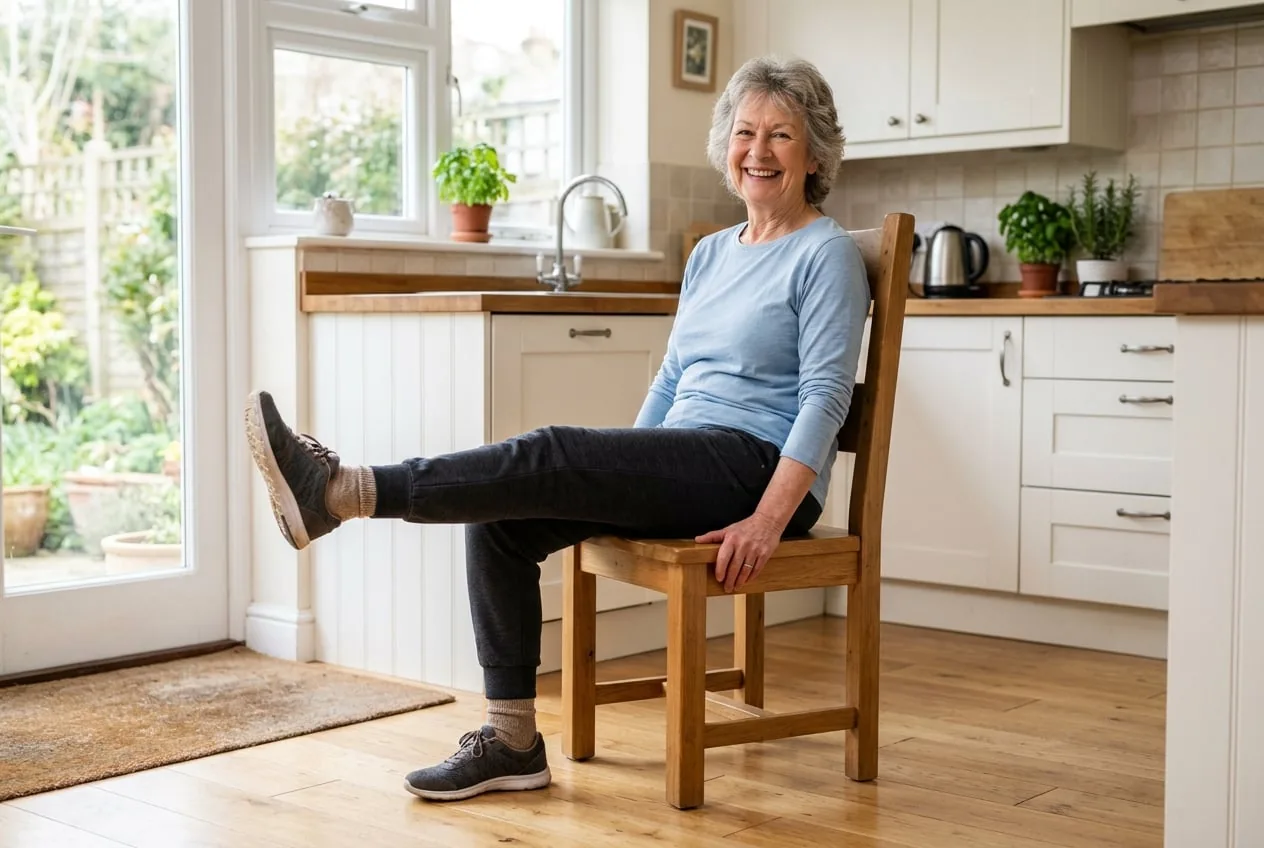
What it looks like: Rest your back against the chair. Slowly straighten one knee. Your leg will go out in front of you. Hold for a moment. Then lower it slowly.
Muscles worked: Front thigh muscles
Why PTs use it: Your front thigh muscles help you stand up from a chair. They help you climb stairs and walk downhill. Working them while seated lets you focus on the muscle. You do not need to balance.
Common changes:
- Easiest: Only straighten partway. No holding.
- Medium: Straighten fully and hold for 3 seconds.
- Harder: Add a light ankle weight. Only do this if your PT says it is okay.
3. Seated Calf Raises
What it looks like: Keep your feet flat on the floor. Lift both heels up. Keep the balls of your feet down. Lower slowly. Then lift just your toes while keeping heels down.
Muscles worked: Calf muscles and shin muscles
Why PTs use it: Strong calves push you forward when you walk. Strong shin muscles stop your foot from dropping. A dropping foot is a big cause of trips and falls. This two-part move covers both. You can do it almost anywhere.
Common changes:
- Easiest: Heel lifts only. Both feet at once.
- Medium: Add toe lifts after heel lifts.
- Harder: One-leg heel lifts. Only with PT approval.
4. Seated Trunk Turns
What it looks like: Sit up tall with feet flat. Gently turn your shoulders to one side. Reach one arm across to the other side of the chair. Come back to center. Then turn the other way.
Muscles worked: Side belly muscles, back muscles, core
Why PTs use it: Almost every daily move needs turning. You turn to look back while driving. You turn to reach across a table. You turn to get in and out of bed. Seated trunk turns help your spine move better. Your lower body stays steady.
Common changes:
- Easiest: Small turn. Hands resting in lap.
- Medium: Turn as far as feels good. Arms crossed at chest.
- Harder: Hold a light ball or pillow at your chest. Turn slowly with each breath.
5. Seated Shoulder Rolls and Reaches
What it looks like: Start with slow shoulder rolls forward and back. Then reach one arm up overhead. Reach the other arm up next. Go back and forth slowly.
Muscles worked: Shoulder and upper back muscles
Why PTs use it: Upper body strength is often left out of senior exercise plans. But strong shoulders help you get dressed. They help you reach into cabinets and wash your hair. They help you push up from a chair. This move wakes up muscles that get weak from sitting too long.
Common changes:
- Easiest: Shoulder rolls only. No reaching overhead.
- Medium: Add overhead reaches one arm at a time.
- Harder: Hold a light water bottle or can in each hand.
How to Build a Routine That Sticks
Most PTs say to start easy. How often you do the moves matters more than how many you do. Here are some ideas that come up a lot in the clinic:
- Do it often, not hard. Five reps each day works much better than twenty reps once a week.
- Link it to something you already do. Many seniors do their moves during morning coffee or the evening news.
- Write down your reps. A simple notebook or our free Daily Exercise & Movement Tracker helps you see how far you have come.
- Stop if something hurts. Tired muscles are okay. Sharp pain or joint pain means stop. Call your doctor.
When to Stop and Call Your Doctor
- New or worse pain that does not go away in 24 hours
- Feeling dizzy or short of breath in an odd way
- Swelling, redness, or warmth in a joint
- Chest pain or pressure (call 9-1-1)
- A fall, near-fall, or new balance problems
Medicare and most insurance plans cover PT with a doctor's referral.
One Last Thought
These five exercises show up in almost every PT clinic that works with older adults. But common does not mean right for everyone. Whether they work for you depends on your health, your strength, your balance, and your goals.
If you want to try them, our free 5 Seated Exercises Guide shows each move with photos and easy-to-read print pages. Bring it to your next visit. Ask your PT or doctor which versions are right for you.
Moving your body is one of the best tools you have to stay on your own. Done with care and help from your health team, even gentle seated moves can make a big difference.
Next step
Print a free home-safety list and movement tracker so the exercises and the house support each other.
Dr. Tyler A. Pahl, DPT, Doctor of Physical Therapy obtained from Briar Cliff University with four years of Medicare home health clinical experience. He also holds an Honor's Bachelor of Science degree in Medical Biology with a minor in Psychology and Interdisciplinary Sciences from the University of South Dakota.
This content is for educational purposes only. Always consult with your healthcare provider before starting or changing any exercise program.